L-Arginine 101: Benefits, Uses, and Safety
L-arginine is one of those nutrients that quietly supports several processes your body relies on every day—particularly healthy circulation and cellular communication. It’s an amino acid found in protein-rich foods and also made by the body, but it can become more relevant during times of physical stress, intense training, or certain health goals where nitric oxide (a key signalling molecule) is part of the conversation.
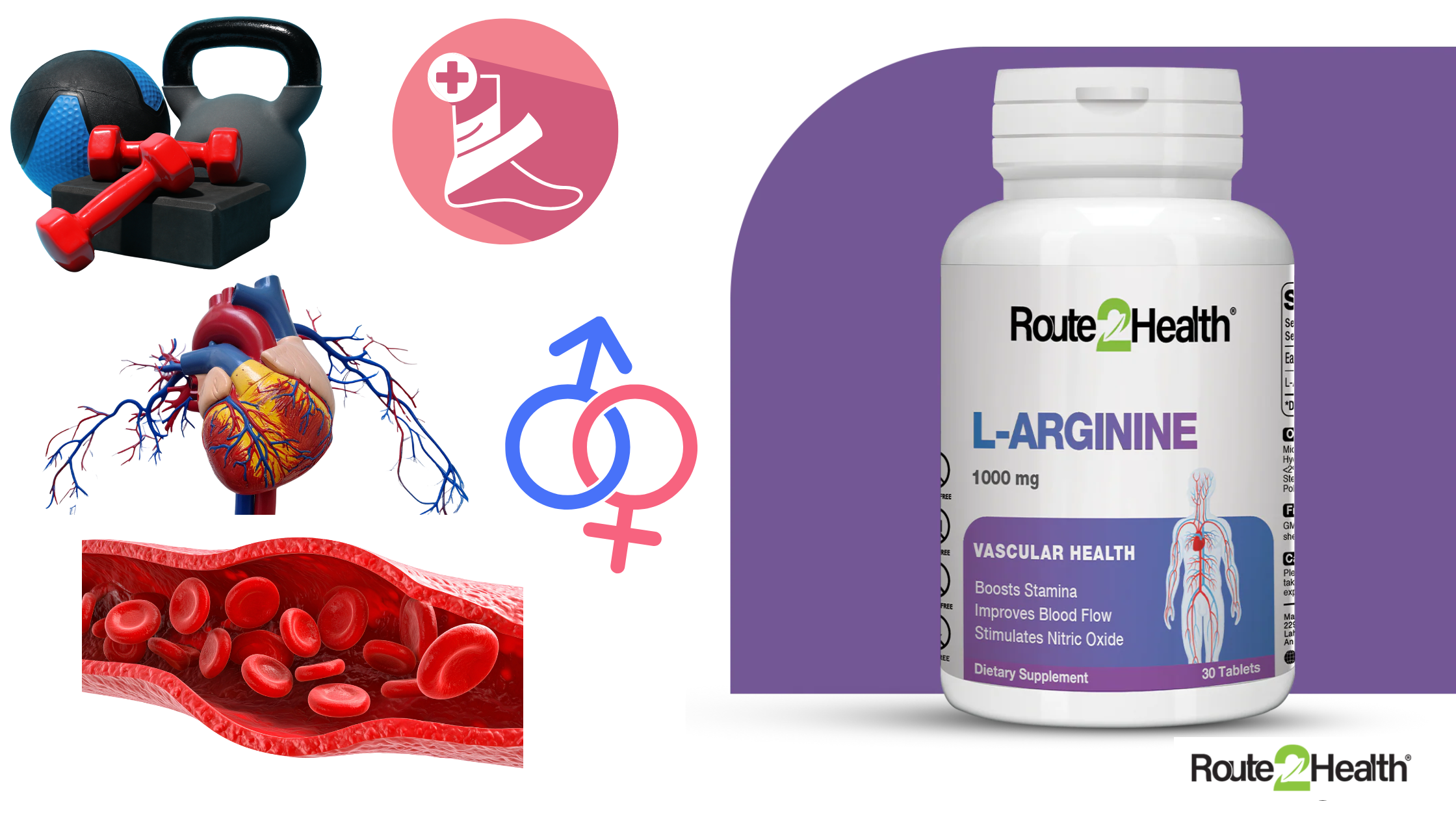
If you’re considering supplementation, L-Arginine by Route2Health is a convenient option to add L-arginine to your routine—especially for people who want consistent daily intake without having to track food sources.
What Is L-Arginine?
L-arginine is an amino acid—often described as “conditionally essential.” That means your body can produce it, but in some situations (growth, illness, injury, or increased physiological demand), your needs may exceed what the body makes naturally.
One of the most important roles of L-arginine is that it acts as a precursor to nitric oxide (NO). Nitric oxide is produced in the lining of blood vessels (the endothelium) and helps blood vessels relax and widen (vasodilation). When blood vessels widen appropriately, it can support efficient blood flow and healthy vascular function.
- Beyond nitric oxide, L-arginine also contributes to:
- Protein synthesis (building and repairing tissues)
- The urea cycle (helping the body process and remove ammonia, a waste product of protein metabolism)
- Creatine formation (relevant for energy systems in muscle)
- Immune function (as amino acids are building blocks for many immune-related compounds)
Because of these roles, L-arginine frequently appears in discussions of cardiovascular health, exercise performance, and sexual health, though the strength of evidence varies by outcome, dose, and population.
How does L-arginine work in the body?
To understand how L-arginine works in the body, you need to understand one simple pathway:
L-arginine → Nitric oxide → Wider blood vessels → Better circulation support
Most of the health benefits attributed to L-arginine are through this pathway. Within the blood vessel walls, an enzyme called nitric oxide synthase (NOS) uses L-arginine to produce nitric oxide. Nitric oxide then signals the surrounding smooth muscle to relax, which can support:
- healthier vessel function
- improved blood flow dynamics
-
better delivery of oxygen and nutrients during activity
That said, real-world outcomes depend on many factors—baseline health, diet, oral dose, absorption, and whether nitric oxide production is limited elsewhere in the pathway.
What Are The Amazing Benefits Of L-Arginine?
Below are the most common benefits of L-arginine
1. Supports Healthy Blood Flow and Vascular Function
One of the most researched benefits of L-arginine is blood pressure support, likely due to its nitric oxide role. Clinical trials suggest a modest reduction in systolic and diastolic blood pressure in many populations—though effects vary by dose, duration, and health status.
Mind you! L-arginine is not a replacement for blood pressure medication, but it may be a useful adjunct for some people—particularly when combined with lifestyle strategies like weight management, activity, sodium-potassium balance, sleep, and stress management.

2. Cardiovascular and Endothelial Function Support
“Endothelial function” refers to how well the inner lining of your blood vessels responds, especially its ability to dilate appropriately. Because nitric oxide is central to this, L-arginine is often positioned as a circulation-support nutrient.
This benefit is most relevant when nitric oxide availability is reduced in conditions that can happen with age, oxidative stress, smoking, metabolic issues, or cardiovascular risk factors. L-arginine improves:
- Flow-mediated dilation
- Vascular responsiveness
- Microcirculation
- Tissue oxygenation
These effects support long-term cardiovascular resilience and metabolic health.
3. Enhances Exercise Blood Flow and Nutrient Delivery
You’ll often see L-arginine in pre-workouts because nitric oxide is linked with blood flow and “pump”. During physical activity, nitric oxide increases muscle perfusion, making L-arginine a good support for better performance, especially for beginners, who typically have lower baseline nitric oxide availability. During and before exercise, L-arginine helps
- Oxygen transport
- Glucose uptake
- Waste removal
- Endurance capacity
While performance outcomes differ across study designs, L-arginine consistently increases nitric oxide availability and blood flow — both essential for muscular efficiency.
4. Supports Sexual and Reproductive Health
Sexual arousal and erectile function are nitric-oxide-dependent processes. L-arginine enhances endothelial nitric oxide synthesis, improving vascular responsiveness within reproductive tissues. Clinical studies show improvements in erectile blood flow when nitric oxide pathways are supported.
L-Arginine is best viewed as a supportive, not definitive treatment—especially when vascular health, stress, sleep, or medication factors are involved.

5. Recovery and Wound-Healing Support
Amino acids are central to tissue repair. L-arginine contributes to pathways involved in collagen formation, immune signalling, and blood flow, all relevant to healing. If you are an everyday wellness user, this is more of a “supportive biology” benefit than a guaranteed result—but it’s one reason L-arginine appears in specialised recovery formulas.
L-arginine contributes to:
- Collagen formation
- Wound healing
- Immune cell proliferation
- Nitrogen balance
It is widely used in clinical nutrition for post-surgical recovery and trauma care due to its regenerative properties.
Who Should Consider An L-arginine Supplement?
L-arginine supplementation may be worth considering if you:
- want nitric oxide support for circulation-focused goals
- are working on cardiometabolic health alongside lifestyle changes
- want an option that supports blood flow-related wellbeing
- are trying to optimise routines around training, recovery, or overall vitality
If that’s your goal, A good L-Arginine supplement alongised a good Multivitamin formula, can fit neatly into a consistent routine—especially when paired with protein-rich meals, hydration, and regular movement.
Safety, Side Effects, and Caution
L-arginine is widely used, but it’s not for everyone.
- Possible side effects can include:
- gastrointestinal upset (bloating, cramps, nausea, diarrhoea)
- Headache
-
light-headedness (especially if blood pressure drops)
Be cautious or seek medical advice first if you:
- take blood pressure medication, nitrates, or medications that affect circulation
- have kidney disease, liver disease, or complex cardiovascular conditions
- have asthma (some people report symptom changes)
- have recurrent herpes outbreaks (arginine can affect viral dynamics in some individuals)
Conclusion
L-arginine is more than just a fitness trend. It’s a biologically important amino acid with a central role in nitric oxide production, which is why it’s linked to circulation, vascular function, and blood-flow-related benefits. The strongest evidence indicates modest support for blood pressure in many contexts, while exercise performance outcomes, even though individualised, are well supported by research too.
If you want a targeted approach to nitric oxide support—grounded in routine and consistency—L-Arginine by Route2Health can be a sensible option as part of a broader lifestyle strategy.
FAQs
1. What is the best L-arginine supplement in Pakistan?
Route2Health’s L-Arginine 1000 mg is one of the best L-arginine supplements in Pakistan. It contains high-quality ingredients, is easy to take, and is produced by a USP-certified nutraceutical company in Pakistan.
2. When should I take the L-arginine supplements?
Most people take it daily, often before exercise or earlier in the day. If it upsets your stomach, take it with food and stay consistent for a few weeks.
3. Can L-arginine help with blood pressure?
Research suggests L-arginine can modestly support blood pressure in some adults, but it does not replace prescribed treatment. If you’re on medication, speak to a clinician first.
4. Is L-arginine good for the “gym pump”?
It may support blood-flow signalling through nitric oxide pathways, which some people experience as a better pump. However, performance results vary by person, training level, and overall diet.
5. Who should avoid L-arginine?
People on nitrates or certain blood pressure medicines, and those with kidney disease, significant heart conditions, asthma concerns, or recurrent herpes outbreaks, should get medical advice before using L-arginine.


Vitamin B Deficiency Symptoms: 8 Signs You May Need a B Complex

Complications of Constipation: How Serious Can Constipation Become If Left Untreated?

Folic Acid Benefits for Women: The One Nutrient Every Woman Should Have

Breastfeeding Tips: 7 Science-Backed Ways to Support a Successful Breastfeeding Journey

Simple Ways to Increase Your Child's Appetite: Practical Tips That Really Help

Infant Colic: Causes, Symptoms, and What Actually Helps?

Benefits of Methylcobalamin: Everything You Must Know Before Starting Lingu B

The Importance of Electrolytes: Why Your Body Needs More Than Just Water

Who Should Be Taking Magnesium Glycinate? 7 Signs You Might Benefit From It

Symptoms of Poor Blood Circulation and How L-Arginine Can Help

Magnesium Deficiency: Signs Your Body May Be Crying Out for Magnesium

Low Energy, Brain Fog, and Weak Immunity? Hidden Deficiencies in Men Explained

What Happens to Your Body When You Aren’t Hydrated Enough?

The Importance of Hydration: Why Water Is the Ultimate Nutrient?

Asthma in Children: Causes, Symptoms, and Treatment Options

Gearing Up for Marathon: Train Smart And Fuel Right To Finish Strong

L-Arginine 101: Benefits, Uses, and Safety

9 Science-Backed Benefits of Zinc: All That You Need To Know

10 Common Sleep Disorders Might Be Keeping You Up

FluAce by Route2Health: Pakistan’s New Favourite Flu Remedy

Vitamin C: A Must-Have in Your Pre-Wedding Skincare and Wellness Routine

The Perfect Regime to Get You Fit This Wedding Season

Magnesium and Sleep: How This Calm Mineral Can Help You Rest Better


The Smog Emergency in Pakistan: Health Risks and Urgent Solutions

How to Increase Glutathione in the Body Naturally?

10 Effective Natural Remedies for Sleep

The Role of Copper and Zinc in Reducing Inflammation and Boosting Immunity


9 Effective Natural Remedies for Cold and Flu: What Really Works?

Top 6 Symptoms of Vitamin Deficiency in Children to Watch Out For

5 Healthy Pregnancy Tips You May Not Know About


The Essential Nutrients You Need to Support a Healthy Pregnancy

Folic Acid Deficiency in Pakistani Women: A Silent Crisis in Maternal Health

B-Complex for Energy Production: The Back-to-School Boost Every Child Needs

Boost Your Child’s Memory and Concentration: 7 Proven Strategies for Sharper Learning

Back to School Boost: All The Ways To Improve Focus, Energy And Immunity

Cranberry and Elderberry: Natural Solutions for UTI Prevention During Hot Weather


Combat Hyperpigmentation from Within: The Power of Vitamin C

The Truth About Magnesium: Breaking Down the Hype and Its Many Forms

Magnesium Glycinate Benefits: All That You Need To Know

Magnesium Glycinate 101: The Ultimate Guide to The Soothing Mineral

Liver Care: The Role of Milk Thistle in Helping the Liver Combat Toxins

Healthy Summer Snacks and Nutrition for Kids: Fun Ideas for the Holidays

The Importance of Glutathione in Your Summer Skincare Routine

7 Effective Strategies To Make Up For Your Child’s Nutritional Deficiencies This Summer


The Link Between Dehydration and UTIs- Why Berdi is Your Summer Ally?