FluAce by Route2Health: Pakistan’s New Favourite Flu Remedy
If it feels like everyone has fever, body aches, a blocked nose, and that miserable “I’ve been hit by a truck” fatigue—your instinct is spot on. According to the WHO, influenza activity has been increasing globally since October 2025, with influenza A viruses dominating in many regions.
And here in Pakistan, winter respiratory illness chatter isn’t just social-media noise. News reporting around mid-December 2025 cited a notable rise in influenza-like illness and highlighted H3N2 being detected in a portion of tested samples, alongside a winter-surge advisory.
Flu isn’t “just a cold.” It can hit harder in young children, especially under 5 (and particularly under 2), older adults (often 65+), and people with asthma, diabetes, heart disease, immune issues, or pregnancy. Their immune responses and reserves are different—so symptoms can escalate faster, dehydration risk is higher, and recovery can take longer.
Why Is FluAce In So Much Demand?
Let’s talk about what’s been happening on the ground: many parents are hearing the same sentence from clinics lately—Try FluAce. When multiple doctors independently start recommending the same product during a flu wave, it’s usually because they’re seeing a pattern:
- Families want symptom relief without jumping straight to unnecessary antibiotics
- The illness is viral for most people, so support-focused approaches become popular
People want something that feels strong, fast, and multi-symptom in one go
That’s exactly the lane FluAce sits in: a herbal/botanical combination designed to support the body during acute flu-like illness (feverishness, aches, congestion, sore throat, cough irritation, fatigue).
What Makes FluAce So Effective?
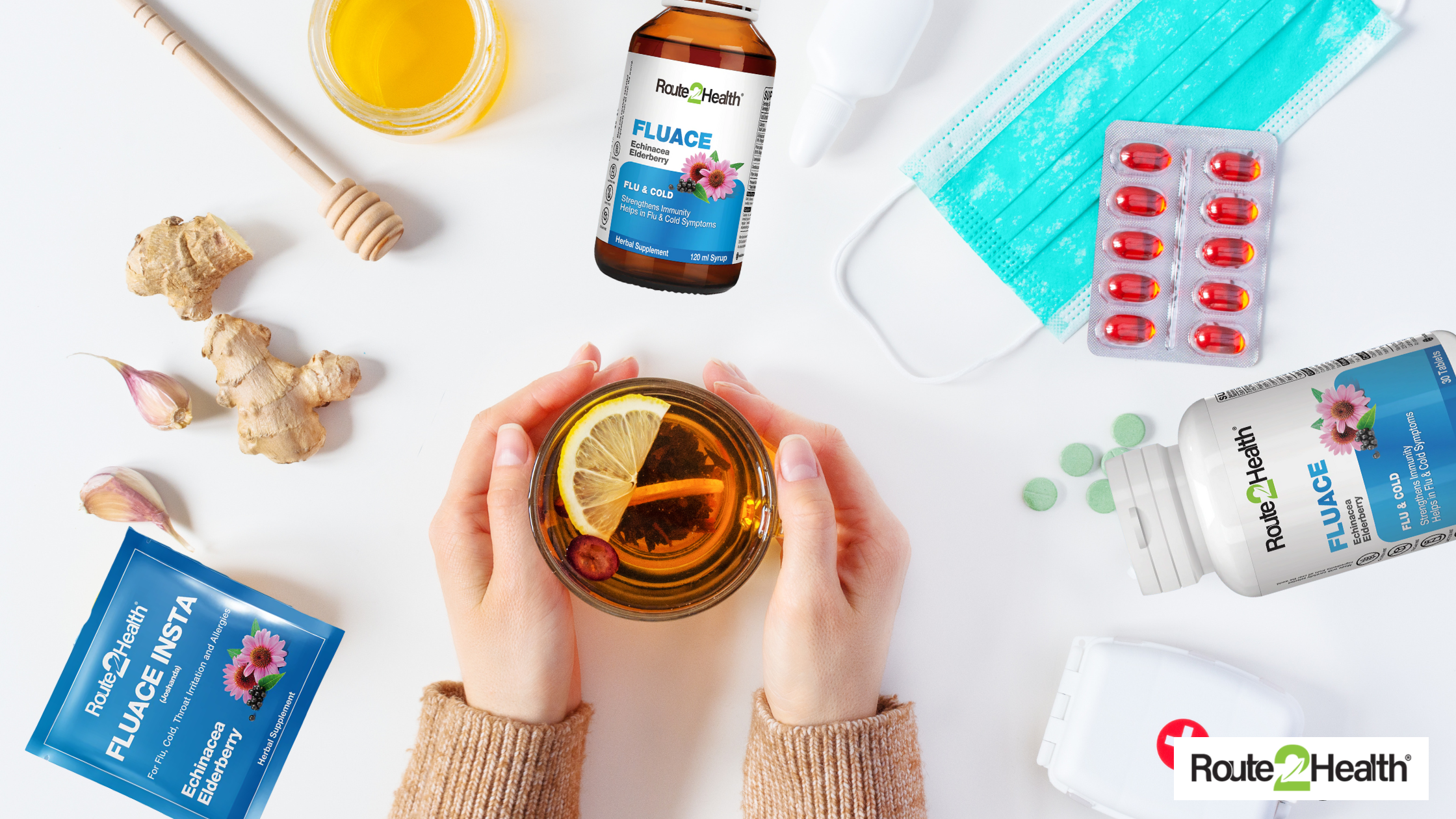
FluAce by Route2Health comes in multiple forms (e.g., tablets, syrup, sachet), with a consistent core blend of extracts. Many flu products fail because they only target one thing. FluAce is designed as a multi-pathway blend, which means it may support several parts of the flu experience at once:
- Immune response support: Echinacea + elderberry
- Inflammation/oxidative stress support: pine bark + echinacea polyphenols
-
Symptom comfort: lavender extract + traditional respiratory support from Piper longum
That “stacking effect” is often why people report feeling more noticeable relief—especially when taken early in the course of illness (first 24–48 hours is typically the sweet spot for many supportive strategies).
1. Echinacea Purpurea
Echinacea is one of the most studied herbal options for upper respiratory infections. A well-known meta-analysis shows that echinacea is associated with decreased incidence and duration of the common cold in randomised trials, though results vary by product and preparation.
More recently, a 2025 meta-analysis focused on children reported echinacea purpurea showing benefit signals across URTI outcomes (including reduced duration and lower antibiotic usage in the included studies), again with the usual caveat: study quality and exact formulations matter.
Flu viruses trigger strong inflammation and immune activation, and Echinacea’s compounds (including polyphenols) are studied for immunomodulatory and anti-inflammatory activity, which may support the body’s response while you ride out the illness. Echinacea won’t “erase flu,” but evidence suggests it may help reduce how long or how intensely respiratory viral symptoms stick around—especially when started early.

2. Sambucus Nigra (Black elderberry)
Elderberry is famous for one reason: people feel it helps fast, and research supports that, especially for influenza-like symptoms. A systematic review and meta-analysis on Sambucus nigra berry found that mono-herbal preparations may reduce influenza-type symptoms such as fever, headache, nasal congestion, and cough.
Flu often brings congestion, sore throat, cough, irritation, and fatigue. Elderberry contains antioxidant anthocyanins that can help lessen these symptoms. Elderberry is one of the best “early days of illness” botanicals for feeling better sooner.
3. Pinus Pinaster
Pinus pinaster bark extract (often discussed under the trademark Pycnogenol® in research contexts) is rich in proanthocyanidins—powerful plant antioxidants. Research shows that of pine bark extract describes a range of anti-inflammatory and antioxidant effects and discusses clinical research across conditions where inflammation and oxidative stress are involved.
Flu can feel brutal partly because your immune system generates inflammatory chemicals and oxidative stress while fighting the virus. Antioxidant-heavy extracts like pine bark may help by supporting antioxidant defences, calming excessive inflammatory signalling, and potentially easing “body ache / sore/inflamed” sensations (indirectly).
4. Lavandula Stoechas
Lavender species are widely studied for anti-inflammatory actions. Research proves the anti-inflammatory effects of Lavandula stoechas extracts (preclinical models), adding to a broader body of lavender research around inflammation modulation.
When your throat is irritated, your chest feels tight, and your head is heavy, “comfort ingredients” matter. Lavender extracts are proven to have anti-inflammatory potential and soothing properties (depending on form/dose and individual response)
Think of L. stoechas as a supportive, soothing part of the blend—more “symptom-comfort” than “direct antiviral.”

5. Piper Longum (long pepper)
Piper longum (Pippali) has a long tradition of use in respiratory complaints, and modern research explores immunomodulatory and anti-inflammatory properties of its constituents (including piperine).
Piper Longum supports inflammatory balance and may aid the “blocked, heavy, phlegmy” feeling some people get during viral illness (traditional use; mechanistic research is still evolving). Piper longum is basically the “warming, respiratory support” ingredient in the blend—aimed at helping your body cope with cold/flu discomfort.
Conclusion
When flu is surging, and families are exhausted, the products that win are the ones that feel relevant to the symptoms people actually have, and are built on ingredients with at least some supportive clinical or mechanistic evidence.
FluAce has become a doctor-recommended favourite for many families because it’s not a “one-note” remedy. It combines echinacea, elderberry, pine bark extract, lavender extract, and Piper longum—aiming to support immune response, soothe inflammation-driven misery, and improve overall comfort while the virus runs its course.
If flu is making the rounds in your home—especially with kids or elders—consider keeping this herbal flu remedy, i.e., FluAce by Route2Health on hand as a supportive option for flu-like symptoms.
FAQs
1. Can FluAce cure the flu?
No. FluAce is not a cure for influenza, but its ingredients may support symptom relief and recovery comfort, especially when used early.
2. Is FluAce an antibiotic?
No. It’s a herbal/botanical combination product, not an antibiotic.
3. When is the best time to start taking FluAce?
Most supportive remedies work best when started at the first signs (first 24–48 hours), when symptoms are building. Elderberry and echinacea studies often evaluate early use.
4. Can children take FluAce?
FluAce has a syrup format, but children differ by age, weight, allergies, and current medications—so follow your paediatrician’s advice and product directions for age-appropriate use.
5. What else should I do alongside FluAce during flu?
Hydration, rest, fever management as advised by your doctor, nasal saline/steam (age-appropriate), and watching for red flags are key. Vaccination is still the strongest prevention tool for seasonal influenza.


Vitamin B Deficiency Symptoms: 8 Signs You May Need a B Complex

Complications of Constipation: How Serious Can Constipation Become If Left Untreated?

Folic Acid Benefits for Women: The One Nutrient Every Woman Should Have

Breastfeeding Tips: 7 Science-Backed Ways to Support a Successful Breastfeeding Journey

Simple Ways to Increase Your Child's Appetite: Practical Tips That Really Help

Infant Colic: Causes, Symptoms, and What Actually Helps?

Benefits of Methylcobalamin: Everything You Must Know Before Starting Lingu B

The Importance of Electrolytes: Why Your Body Needs More Than Just Water

Who Should Be Taking Magnesium Glycinate? 7 Signs You Might Benefit From It

Symptoms of Poor Blood Circulation and How L-Arginine Can Help

Magnesium Deficiency: Signs Your Body May Be Crying Out for Magnesium

Low Energy, Brain Fog, and Weak Immunity? Hidden Deficiencies in Men Explained

What Happens to Your Body When You Aren’t Hydrated Enough?

The Importance of Hydration: Why Water Is the Ultimate Nutrient?

Asthma in Children: Causes, Symptoms, and Treatment Options

Gearing Up for Marathon: Train Smart And Fuel Right To Finish Strong

L-Arginine 101: Benefits, Uses, and Safety

9 Science-Backed Benefits of Zinc: All That You Need To Know

10 Common Sleep Disorders Might Be Keeping You Up

FluAce by Route2Health: Pakistan’s New Favourite Flu Remedy

Vitamin C: A Must-Have in Your Pre-Wedding Skincare and Wellness Routine

The Perfect Regime to Get You Fit This Wedding Season

Magnesium and Sleep: How This Calm Mineral Can Help You Rest Better


The Smog Emergency in Pakistan: Health Risks and Urgent Solutions

How to Increase Glutathione in the Body Naturally?

10 Effective Natural Remedies for Sleep

The Role of Copper and Zinc in Reducing Inflammation and Boosting Immunity


9 Effective Natural Remedies for Cold and Flu: What Really Works?

Top 6 Symptoms of Vitamin Deficiency in Children to Watch Out For

5 Healthy Pregnancy Tips You May Not Know About


The Essential Nutrients You Need to Support a Healthy Pregnancy

Folic Acid Deficiency in Pakistani Women: A Silent Crisis in Maternal Health

B-Complex for Energy Production: The Back-to-School Boost Every Child Needs

Boost Your Child’s Memory and Concentration: 7 Proven Strategies for Sharper Learning

Back to School Boost: All The Ways To Improve Focus, Energy And Immunity

Cranberry and Elderberry: Natural Solutions for UTI Prevention During Hot Weather


Combat Hyperpigmentation from Within: The Power of Vitamin C

The Truth About Magnesium: Breaking Down the Hype and Its Many Forms

Magnesium Glycinate Benefits: All That You Need To Know

Magnesium Glycinate 101: The Ultimate Guide to The Soothing Mineral

Liver Care: The Role of Milk Thistle in Helping the Liver Combat Toxins

Healthy Summer Snacks and Nutrition for Kids: Fun Ideas for the Holidays

The Importance of Glutathione in Your Summer Skincare Routine

7 Effective Strategies To Make Up For Your Child’s Nutritional Deficiencies This Summer


The Link Between Dehydration and UTIs- Why Berdi is Your Summer Ally?