
Gearing Up for Marathon: Train Smart And Fuel Right To Finish Strong
The countdown has begun. Your running shoes are waiting, your playlist is ready, and that start line feels closer than ever. But gearing up for marathon success isn’t just about clocking miles — it’s about preparing your body, fuelling your cells, strengthening your joints, and training your mind. Whether you’re a first-time runner or returning to beat your personal best, the right preparation can mean the difference between merely finishing and finishing strong.
Gearing up for marathon success requires far more than simply running longer each week. It requires a strategic blend of progressive training, metabolic conditioning, joint support, precise hydration, and targeted nutrition. When done correctly, you are not just preparing to complete multiple kilometres — you are preparing your physiology to sustain, adapt, and perform under prolonged stress.
In this complete guide to gearing up for a marathon, we’ll walk you through ten scientifically grounded strategies that optimise endurance, reduce injury risk, and enhance recovery — while highlighting how targeted nutritional support from Route2Health can help you perform at your peak.
1. Build Gradual Endurance Through Progressive Overload
When gearing up for marathon training, your cardiovascular system, muscles, and connective tissues must adapt progressively.
- Running increases cardiac output — the amount of blood your heart pumps per minute.
- Over time, endurance training increases stroke volume (blood pumped per beat) and mitochondrial density in muscle cells.
- More mitochondria mean more efficient ATP production — your body’s energy currency.
- Gradual mileage increases strengthen tendons and ligaments, reducing injury risk.
However, these adaptations require time. Increasing mileage too rapidly overwhelms connective tissues before collagen remodelling occurs, raising the risk of stress fractures and tendon injuries. A gradual 10% weekly increase in mileage allows cardiovascular and musculoskeletal systems to adapt in synchrony.
Support cellular energy production with a high-quality B-Complex Supplement, ensuring adequate B-vitamins that support mitochondrial energy pathways.
2. Prioritise Structured Long Runs
Long runs are foundational when gearing up for marathon performance because they train the body to shift between fuel systems. Initially, muscles rely heavily on glycogen — stored glucose in the liver and muscle tissue. As exercise duration increases and glycogen declines, hormonal signals stimulate lipolysis, breaking down stored fat into fatty acids for energy.
With consistent long-distance training, enzymes involved in fat oxidation increase in activity. This improves the body’s ability to spare glycogen and delay fatigue, reducing the likelihood of “hitting the wall.” These metabolic adaptations are central to improved endurance, which is essential when preparing for marathons longer than 30 km.
3. Optimise Hydration and Electrolyte Balance
Hydration is not simply about drinking water — it’s about maintaining plasma volume and electrolyte equilibrium. During prolonged exercise, fluid is lost through sweat to regulate body temperature. If this loss is not replaced, plasma volume decreases. Reduced plasma volume lowers stroke volume, forcing heart rate to rise in order to maintain cardiac output — a phenomenon known as cardiovascular drift. accelerating fatigue. Research shows that even a 2% reduction in body mass from fluid loss can significantly reduce endurance performance. Therefore, consistent hydration before, during, and after runs is fundamental when gearing up for marathon training.
Consider pairing hydration with a balanced multivitamin to maintain magnesium and potassium levels, essential for muscle contraction.

4. Enhance Nitric Oxide Production for Blood Flow
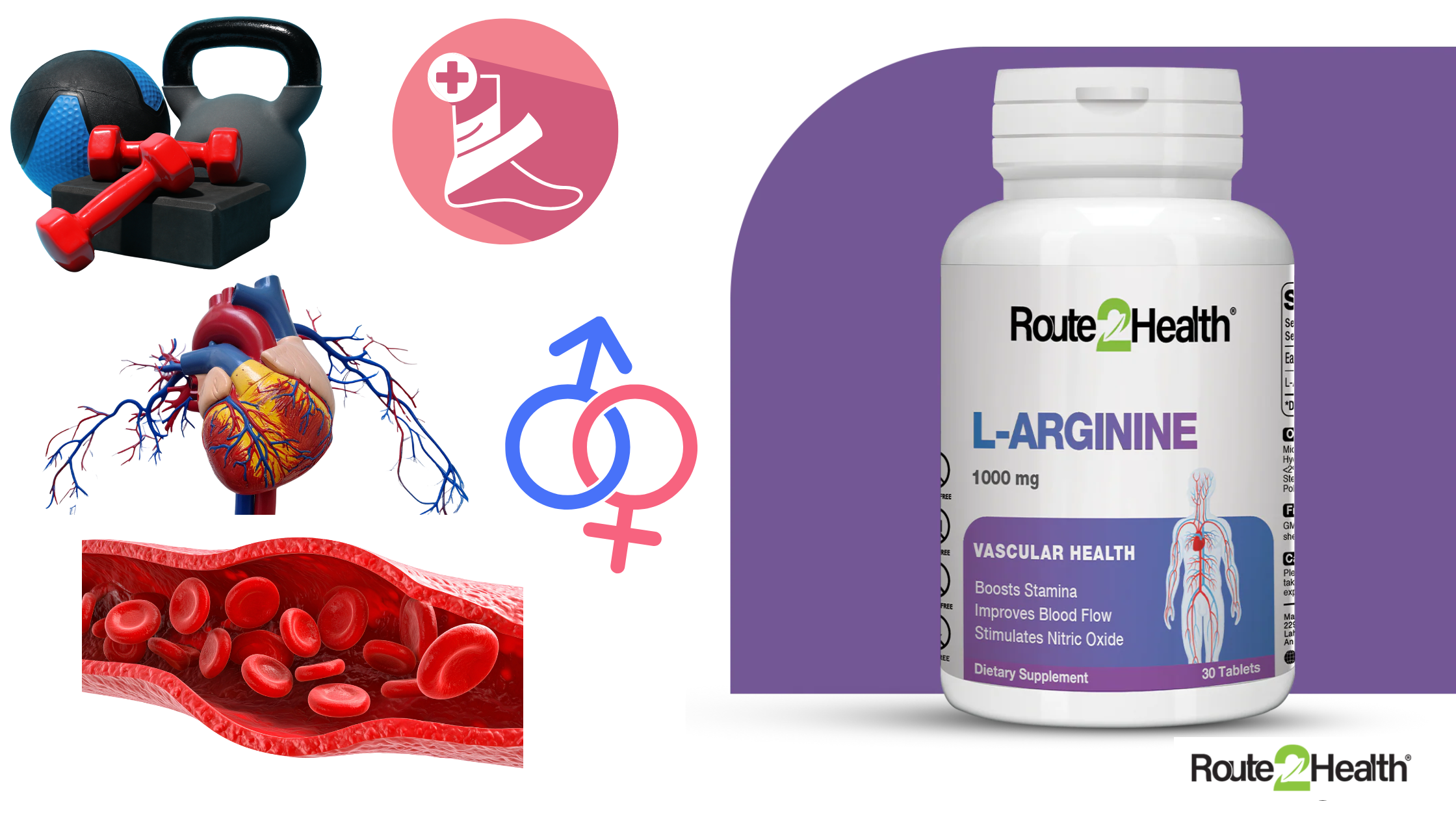
Efficient oxygen delivery determines endurance capacity. L-arginine serves as a precursor to nitric oxide, a signalling molecule that relaxes the smooth muscle of blood vessels. When nitric oxide production increases, vasodilation occurs, widening blood vessels and improving blood flow to working muscles.
Enhanced circulation improves oxygen and glucose delivery, supports the removal of metabolic by-products, and may improve exercise tolerance. When gearing up for marathon training, incorporating L-Arginine by Route2Health may support vascular efficiency and endurance output.
5. Strengthen Your Joints and Cartilage
Repetitive impact loading during marathon training places substantial stress on articular cartilage, tendons, and ligaments. Cartilage acts as a shock absorber, distributing mechanical forces across joint surfaces. With repeated strain, the extracellular matrix of cartilage can undergo breakdown if not adequately supported.
Flexa Plus by Route2Health may assist in preserving joint lubrication and resilience, particularly during high-mileage phases. Protecting joints proactively rather than reactively is a critical aspect of preparing for a marathon.
6. Focus on Dynamic Stretching Before Runs
Before each run, the goal is not simply to stretch but to activate. Dynamic movements raise muscle temperature, enhance nerve conduction velocity, and increase the elasticity of connective tissues. Warmer muscles contract more efficiently, improving stride mechanics and reducing strain.
Effective dynamic warm-ups may include:
- Leg swings to activate hip flexors and extensors
- High knees to stimulate neuromuscular firing
- Walking lunges to engage gluteal stabilisers
This preparation ensures your neuromuscular system is primed before sustained effort.
7. Incorporate Strength Training Twice Weekly
Strength training enhances running economy. It leads to
- Increased neuromuscular coordination.
- Improved motor unit recruitment.
- Enhanced tendon stiffness.
- Reduced ground contact time.
Stronger muscles require less oxygen for the same workload, conserving energy across marathon distances.

8. Optimise Carbohydrate Loading
In the final 48–72 hours before race day, carbohydrate intake should increase. In the final days before race day, increasing carbohydrate intake elevates muscle glycogen stores. Glycogen binds water within muscle tissue, supporting hydration and extending the duration before fatigue sets in. This strategic nutritional adjustment ensures maximal energy availability for race day without gastrointestinal discomfort if practised correctly during training cycles.
9. Prioritise Sleep and Recovery
Sleep regulates hormonal repair processes.
During Deep Sleep:
- Growth hormone secretion increases.
- Muscle protein synthesis rises.
- Inflammation decreases.
- Cortisol levels balance.
Insufficient sleep impairs glucose metabolism and increases injury risk. Aim for 7–9 hours nightly when gearing up for marathon training.
10. Enhance Repair With Micronutrient Support
Training induces micro-damage in muscle fibres. The body responds by activating satellite cells, synthesising new proteins, and strengthening muscle tissue. This repair process depends heavily on adequate micronutrient availability.
Key nutrients include:
- Vitamin C for collagen synthesis
- Zinc for tissue repair
- Magnesium for muscle relaxation and energy metabolism
Route2Health multivitamins provide foundational support, ensuring that nutritional gaps do not compromise adaptation.
Conclusion: Preparation Determines Performance
Gearing up for marathon excellence is a systematic process rooted in physiology. Every kilometre trained builds mitochondrial density. Every long run improves fat oxidation. Every night of quality sleep enhances repair. Every properly timed nutrient supports adaptation.
The marathon is not conquered on race day; it is built across weeks of structured effort, intelligent hydration, joint protection, and metabolic optimisation. With disciplined training and science-backed nutritional support from Route2Health, you can prepare not only to cross the finish line — but to do so with strength, resilience, and confidence.
FAQs
1. How long does it take to prepare for a marathon?
Most runners require 12–16 weeks of structured training to prepare safely and effectively.
2. Is L-arginine beneficial for endurance runners?
It may support nitric oxide production, enhancing blood flow and oxygen delivery during prolonged exercise.
3. Do I need supplements while training for a marathon?
While food remains primary, targeted supplementation can help prevent micronutrient gaps and support joint and cardiovascular health.
4. How important is hydration in marathon training?
Even mild dehydration can impair endurance performance and thermoregulation.
5. What is the most common mistake when gearing up for marathon training?
Increasing mileage too quickly without adequate recovery and joint support.

Vitamin B Deficiency Symptoms: 8 Signs You May Need a B Complex

Complications of Constipation: How Serious Can Constipation Become If Left Untreated?

Folic Acid Benefits for Women: The One Nutrient Every Woman Should Have

Breastfeeding Tips: 7 Science-Backed Ways to Support a Successful Breastfeeding Journey

Simple Ways to Increase Your Child's Appetite: Practical Tips That Really Help

Infant Colic: Causes, Symptoms, and What Actually Helps?

Benefits of Methylcobalamin: Everything You Must Know Before Starting Lingu B

The Importance of Electrolytes: Why Your Body Needs More Than Just Water

Who Should Be Taking Magnesium Glycinate? 7 Signs You Might Benefit From It

Symptoms of Poor Blood Circulation and How L-Arginine Can Help

Magnesium Deficiency: Signs Your Body May Be Crying Out for Magnesium

Low Energy, Brain Fog, and Weak Immunity? Hidden Deficiencies in Men Explained

What Happens to Your Body When You Aren’t Hydrated Enough?

The Importance of Hydration: Why Water Is the Ultimate Nutrient?

Asthma in Children: Causes, Symptoms, and Treatment Options

Gearing Up for Marathon: Train Smart And Fuel Right To Finish Strong

L-Arginine 101: Benefits, Uses, and Safety

9 Science-Backed Benefits of Zinc: All That You Need To Know

10 Common Sleep Disorders Might Be Keeping You Up

FluAce by Route2Health: Pakistan’s New Favourite Flu Remedy

Vitamin C: A Must-Have in Your Pre-Wedding Skincare and Wellness Routine

The Perfect Regime to Get You Fit This Wedding Season

Magnesium and Sleep: How This Calm Mineral Can Help You Rest Better


The Smog Emergency in Pakistan: Health Risks and Urgent Solutions

How to Increase Glutathione in the Body Naturally?

10 Effective Natural Remedies for Sleep

The Role of Copper and Zinc in Reducing Inflammation and Boosting Immunity


9 Effective Natural Remedies for Cold and Flu: What Really Works?

Top 6 Symptoms of Vitamin Deficiency in Children to Watch Out For

5 Healthy Pregnancy Tips You May Not Know About


The Essential Nutrients You Need to Support a Healthy Pregnancy

Folic Acid Deficiency in Pakistani Women: A Silent Crisis in Maternal Health

B-Complex for Energy Production: The Back-to-School Boost Every Child Needs

Boost Your Child’s Memory and Concentration: 7 Proven Strategies for Sharper Learning

Back to School Boost: All The Ways To Improve Focus, Energy And Immunity

Cranberry and Elderberry: Natural Solutions for UTI Prevention During Hot Weather


Combat Hyperpigmentation from Within: The Power of Vitamin C

The Truth About Magnesium: Breaking Down the Hype and Its Many Forms

Magnesium Glycinate Benefits: All That You Need To Know

Magnesium Glycinate 101: The Ultimate Guide to The Soothing Mineral

Liver Care: The Role of Milk Thistle in Helping the Liver Combat Toxins

Healthy Summer Snacks and Nutrition for Kids: Fun Ideas for the Holidays

The Importance of Glutathione in Your Summer Skincare Routine

7 Effective Strategies To Make Up For Your Child’s Nutritional Deficiencies This Summer


The Link Between Dehydration and UTIs- Why Berdi is Your Summer Ally?